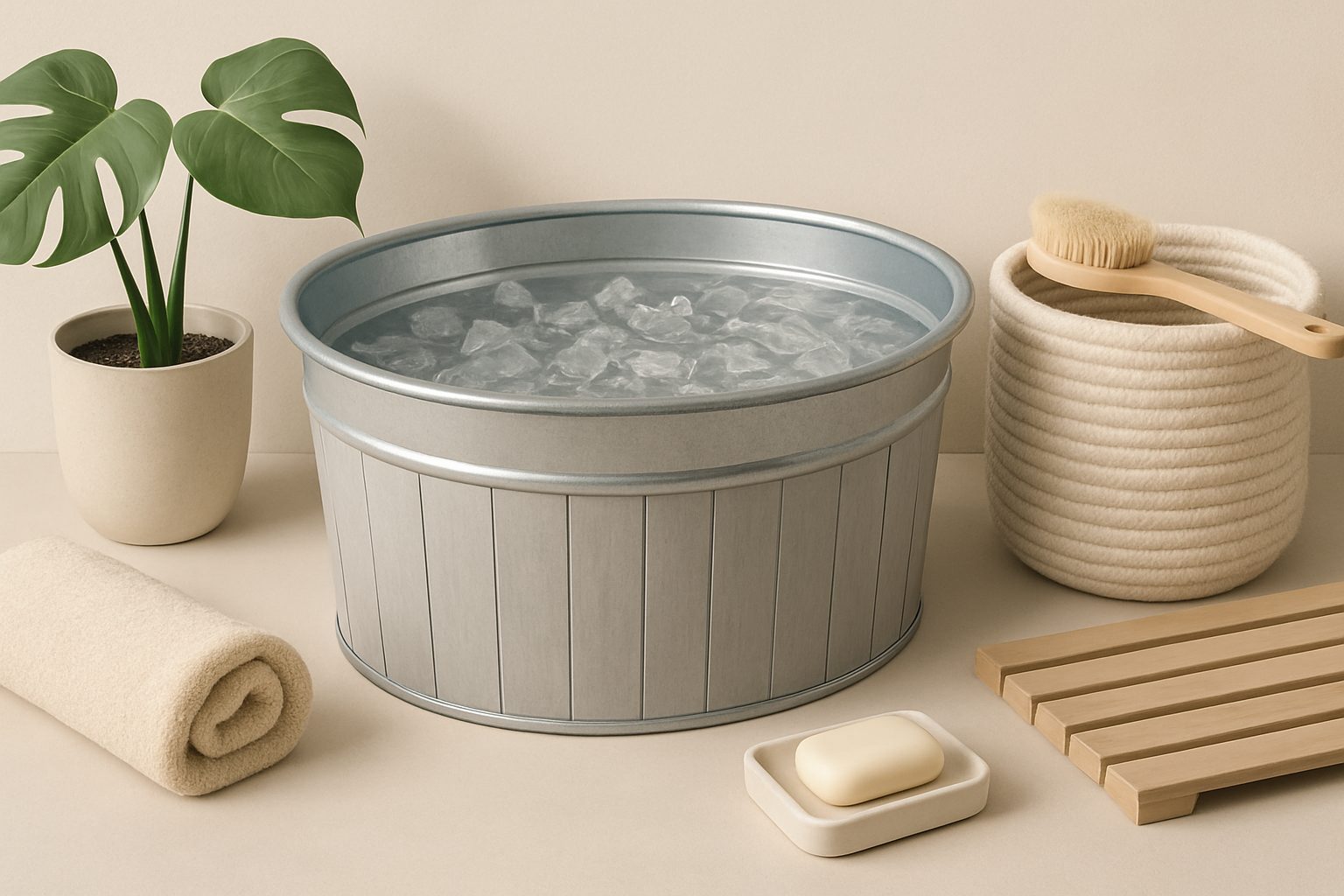
Best Cold Plunge Tanks for Athletes & Post-Workout Recovery UK 2025
Cold water immersion has moved beyond biohacking trends into legitimate athlete recovery routines. Professional sports teams, UK running clubs, and gym-serious people now have decent home options—though the market is still young and prices reflect that. If you're serious about post-workout recovery and have the space and budget, a proper cold plunge tank with temperature control beats ice baths and random tubs of cold water.
The difference between a basic tub and a real cold plunge system is the chiller unit. Without active cooling, water warms quickly, especially in a heated home. That means either frequent ice top-ups (expensive, inconsistent) or accepting water that's too warm to be useful. A built-in chiller keeps temperature stable for weeks, not hours.
What Actually Matters in a Home Cold Plunge Tank
Active Chiller Unit
This is the core piece. Look for systems with at least 1.5 kW chiller capacity for tanks 600 litres or larger. Compressor-based chillers (the standard) will cool water to around 4°C reliably. They're louder than you might expect—anywhere from 60 to 75 decibels when running. If yours shares walls with neighbours, that's worth knowing. Some units run on 13-amp plugs; others need a dedicated circuit. Check before buying.
Temperature Control & Stability
A tank that holds 10°C for a week is useless if it drifts to 15°C by day three. Digital controllers with ±1°C accuracy are standard on mid-range systems. Look for units that maintain your target temperature without constant cycling, which wastes energy and stresses the chiller.
Hygiene & Filtration
You're sitting naked in warm, enclosed water that takes days to cycle. Biofilm grows. Some tanks include circulation pumps and basic filtration; others assume you'll change the water frequently. For regular use, built-in filtration makes genuine difference—both for water clarity and the stuff you don't see.
Insulation & Build Materials
Most tank shells are either fibreglass, stainless steel, or marine-grade rotomoulded plastic. Fibreglass is common and adequate but can degrade under UV if outdoor. Stainless steel is tough and isolates temperature well but costs more and requires grounding. Rotomoulded plastic is durable, lighter, and practical for most home users. Check lid insulation too; a thin cover wastes a third of your chiller's work.
Realistic Tank Sizes for Home Use
A 600-litre tank (roughly 80 cm × 200 cm) accommodates most adults stretched out. Smaller 400-litre units exist but feel cramped if you're above average height or want to move around. Anything under 400 litres struggles with chiller efficiency—the water temperature resets faster when someone gets in. Larger tanks (800+) are overkill for single-user recovery unless you're planning group sessions.
Key Buying Considerations
Installation
Most tanks require a level, solid surface. Weight ranges 200–400 kg when empty, 600–800+ kg when full. Decking or garage floors work; suspended first-floor installations need structural checks. Drainage matters—you'll want to empty it occasionally, so proximity to a floor drain or outdoor access helps. Some people use submersible pumps and garden hose arrangements; it's less elegant but avoids plumbing.
Running Costs
A typical 1.5 kW chiller runs 6–10 hours daily to maintain 10°C in a 700-litre tank, depending on ambient temperature and insulation. That's roughly 10–15 pence per day in electricity—about £36–55 yearly. Not negligible but reasonable against membership fees at facilities with plunge pools. Winter months cost less; summer considerably more if your kitchen or garage gets warm.
Maintenance Reality
Monthly water changes, weekly filter checks (if fitted), and annual chiller servicing are standard. Many units come with basic test kits for pH and chlorine. Some people run low chlorine; others use salt systems or UV sterilisation. The simpler approach—just change water every 3–4 weeks if you use it regularly—works fine.
Who This Makes Sense For
Home cold plunge tanks suit people who:
- Train hard 4+ days weekly and live near a facility without existing recovery pools
- Have consistent space (garage, utility room, decked patio)
- Aren't bothered by the upfront cost (£3,000–8,000 installed)
- Plan to use it at least twice weekly (the maths work better with regular use)
They're less practical if you're testing the waters, live in a small flat, or want to avoid another appliance running in the background.
The Honest Take
Cold plunge recovery is real—immersion in 10°C water for 3 minutes does something measurable for soreness and inflammation. Whether that effect justifies the cost and hassle is personal. Professional athletes get this benefit from club facilities. If you're training seriously at home and have space and budget, a proper system works. If you're curious but not committed, try sessions at existing facilities (most UK leisure centres have cold pools, though not dedicated cold plunge setups) before investing.
Avoid the cheapest inflatable or basic fibreglass units without chillers. They warm too quickly and create more frustration than benefit. Mid-range systems from UK suppliers with decent warranty cover offer the best balance—proper cooling, realistic noise levels, and chiller support when you need it.
The market will mature. Prices will drop, noise will improve, and design will get smarter. Right now, home cold plunge tanks are good for committed athletes. In five years, they'll probably be standard gym equipment.
More options
- Cold Plunge Tubs & Ice Bath Tanks (Amazon UK)
- Inflatable Cold Plunge & Ice Bath Inflatables (Amazon UK)
- Cold Water Chiller & Cooling Units (Amazon UK)
- Waterproof Thermometers & Cold Plunge Accessories (Amazon UK)
- Ice Bath Covers, Steps & Recovery Accessories (Amazon UK)