Best Cold Plunge Tanks for Beginners UK: Start Your Ice Bath Journey Right
Cold water immersion has moved from fitness fad to mainstream wellness practice. If you're curious about cold plunging but unsure where to start, choosing the right tank matters more than jumping into the cheapest option and abandoning it after three sessions.
The difference between a beginner-friendly setup and a frustrating one often comes down to temperature control, ease of setup, and whether the tank actually fits your space. This guide cuts through the marketing and focuses on what genuinely matters when you're new to cold plunging.
Why beginner-friendly tanks matter
Your first cold plunge tank shapes your entire experience. A poorly insulated tank that takes hours to chill, leaks after two weeks, or arrives with missing parts doesn't just waste money—it kills motivation before you've given the practice a real chance.
Beginners also need different things than experienced cold plungers. You want temperature stability more than you want a sauna-grade heating element. You need clear safety guidelines, not just a manual. You benefit from reasonable portability, because you might move house or realise your living room setup needs tweaking.
Starting right means you're actually building a habit you can stick with, not just spending £800 on something that becomes expensive garden furniture.
Key features to prioritize
Temperature control and stability
This is non-negotiable. A tank that fluctuates wildly between 8°C and 15°C is frustrating and unsafe. Look for models with a thermostat (digital or analogue) that can hold your target temperature within 1–2°C.
For beginners, you want reliable cold—ideally hitting 10–15°C consistently. Cheaper tanks without temperature control work only if you have extremely cold external conditions, which UK winters mostly don't provide.
Insulation quality
Insulation directly affects running costs and usability. Double-walled tanks with foam insulation lose heat much more slowly than single-walled models. You'll pay more upfront but save on running costs and get more stable sessions.
Size and space fit
Beginners often overestimate how much room they need. A 500-litre tank is plenty for most people—you're submerging to chest or neck level, not swimming laps. Measure your space honestly. A tank that doesn't fit your garden or garage becomes someone else's problem quickly.
Drainage and maintenance
A tank without an easy drain valve is tedious to maintain. Look for models with a bottom drain plug and a hose fitting. You shouldn't need tools to drain or refill.
Safety and stability
The tank should be sturdy enough that you can't tip it or create a collapse hazard. Heavy-gauge construction, stable legs or a frame, and non-slip surfaces matter more than they sound.
Common beginner mistakes and how to avoid them
Buying too cheap
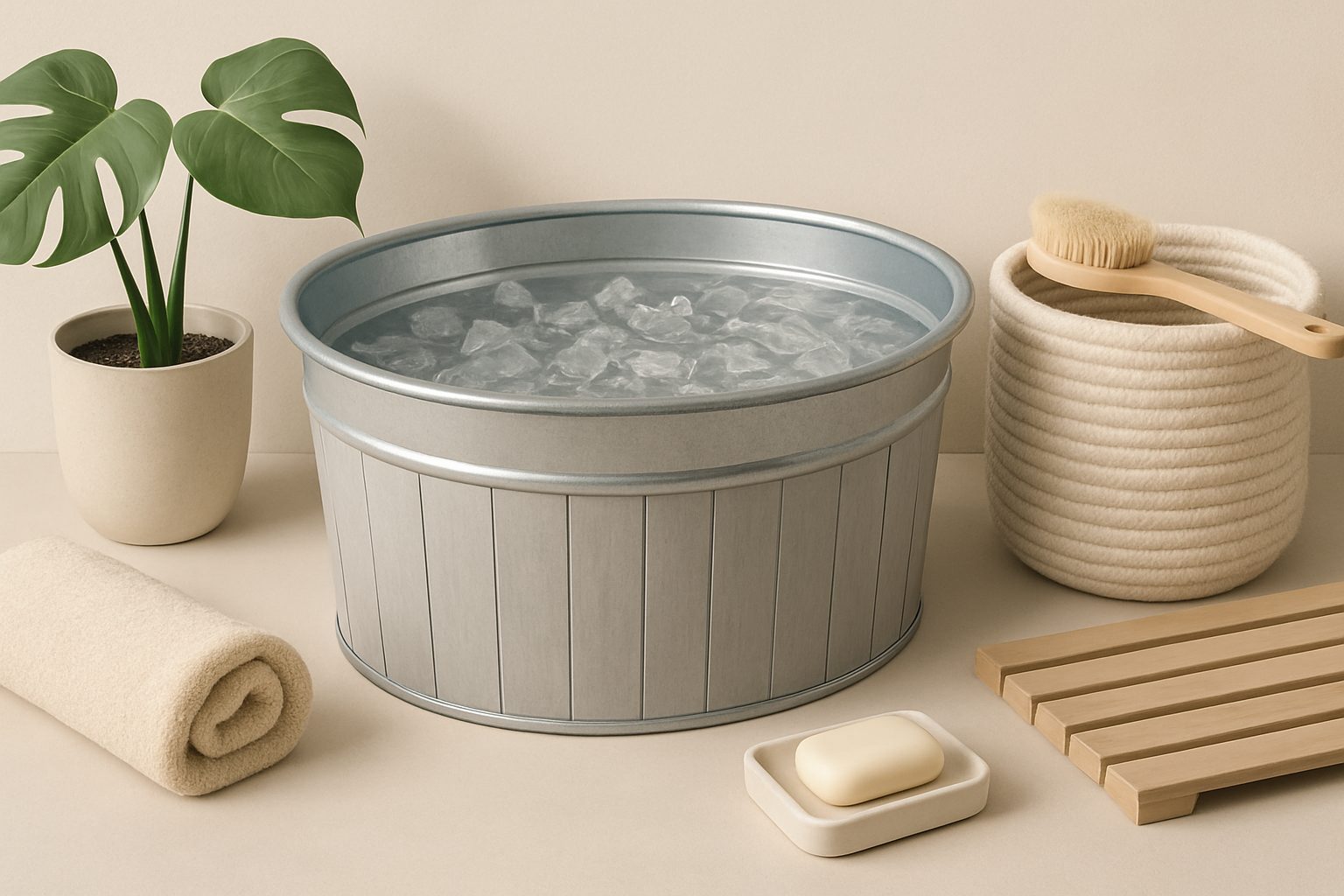
A £200 galvanised trough might technically hold water and ice, but it will rust within a season, provide no temperature control, and test your commitment ruthlessly. Budget £500–£1000 for something that will last and function properly.
Skipping the thermostat
Manual cooling (adding ice repeatedly) works, but it's inconsistent and time-consuming. Tanks with built-in chillers cost more but deliver the stability that makes cold plunging sustainable.
Overestimating your cold tolerance
Beginners often set their target temperature too low. Starting at 15°C and building down to 10°C over weeks makes sense. Jumping into 5°C on day one leads to gasping, panic, and quitting. Honest cold plunge instruction starts beginner-friendly.
Not planning drainage
If your tank sits on gravel or decking that floods, or if you can't reach the drain, maintenance becomes a nightmare. Think about where water goes before you buy.
Ignoring water quality
Chlorine or a mineralised system prevents algae and bacteria. Don't skip this. Cold water is harder to keep clean than warm water, and a cloudy tank is demoralizing.
Getting started safely
Cold immersion carries real risks if you don't approach it sensibly. Your first sessions shouldn't push limits.
Start with 2–3 minutes at 15°C. Your nervous system needs time to adapt. Breathe steadily—rapid, shallow breathing is what feels frightening. Control your breathing, and cold feels manageable.
Always use the gradual warm-up method: feet first, then knees, then hips, then full immersion. Never jump straight in. Your body needs a few seconds to adjust to each stage.
Exit immediately if you experience uncontrollable shivering, confusion, or chest pain. These aren't badges of honour; they're signals to stop.
Never cold plunge alone when you're learning. A friend monitoring your session costs nothing and could be important if something goes wrong.
Budget considerations
Entry-level (£500–£800)
Basic insulated tanks with manual temperature control or simple chiller systems. Good for establishing the habit, limited by unstable temperatures.
Mid-range (£800–£1500)
Proper insulation, reliable thermostats, easier maintenance. Most beginners find their permanent setup here.
Premium (£1500+)
Advanced chiller systems, integrated heating, luxury materials. Worth it only if you know you're committed and want the full spa experience.
Avoid the temptation to start at the very bottom. A £300 tank often becomes a £300 hole in the ground. Spending £600–£800 on something solid sets you up properly.
The next step
Once you've picked your tank and completed your first month, you'll know whether cold plunging fits your life. Some people use it daily for recovery and mental health; others do it twice weekly for the ritual. Neither is wrong.
Beginners who succeed don't usually need the fanciest equipment—they need something reliable enough to build a habit around, and enough support to avoid the common pitfalls.
Choose thoughtfully, start slowly, and give yourself time to adjust. Your first cold plunge tank should be the beginning of a practice you actually stick with, not another expensive experiment.
More options
- Cold Plunge Tubs & Ice Bath Tanks (Amazon UK)
- Inflatable Cold Plunge & Ice Bath Inflatables (Amazon UK)
- Cold Water Chiller & Cooling Units (Amazon UK)
- Waterproof Thermometers & Cold Plunge Accessories (Amazon UK)
- Ice Bath Covers, Steps & Recovery Accessories (Amazon UK)