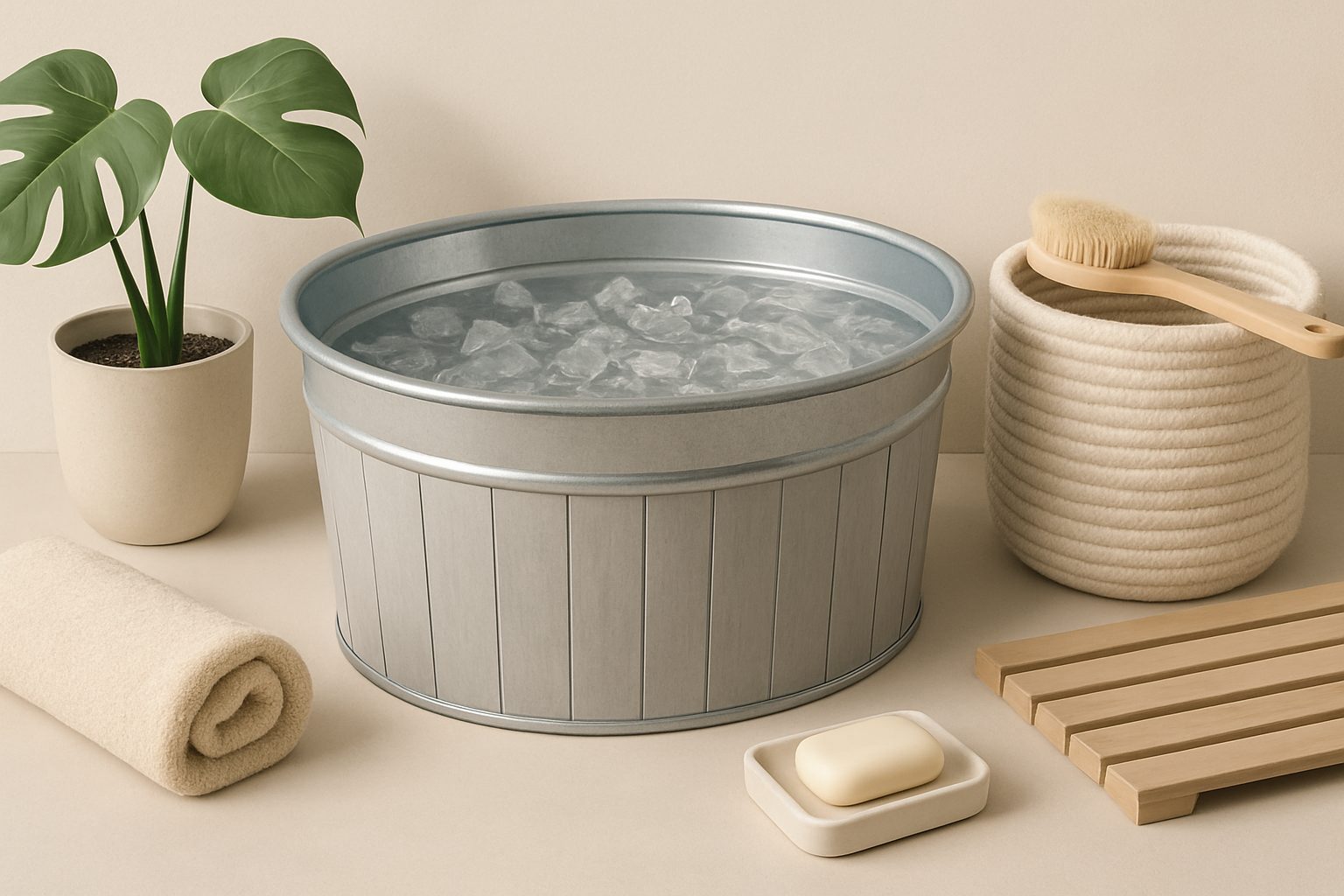
Best Cold Plunge Tanks Under £1,000 UK: Mid-Range Options Worth Every Penny
Cold plunging has moved beyond the luxury spa territory. You don't need to spend £3,000+ to get a functional, durable cold plunge tank that'll last years and handle regular use. The £500–£999 bracket offers genuine value: solid insulation, reasonable build quality, and enough features to avoid buyer's remorse.
The catch? You're choosing between three distinct product types, each with different trade-offs. Understanding what you're actually buying matters more than the price tag.
Rigid Plastic Tubs: The Practical Choice
These are the workhorses of the mid-range market. Brands like IcePlunge and ColdTub manufacture rotomoulded polyethylene tubs—the same technology used for industrial storage tanks and horse troughs, adapted for human use.
A quality rigid tub in this price range holds 300–500 litres and comes insulated with 5–10 cm of foam. That insulation thickness is the real differentiator. Cheaper models skimp here; better ones actually invest in proper density foam that doesn't compress into uselessness after a season.
What you get: These tubs are genuinely low-maintenance. No liners to replace, no complex filtration systems to fight with. You fill it, chill it (usually with a separate chiller unit or just ice), drain it, and repeat. The build quality is straightforward—plastic doesn't rot or corrode. They're heavy (100+ kg) once filled, so placement matters, but that heft translates to stability. Tipping one over mid-plunge isn't happening.
Real limitations: Rigid tubs in this price bracket rarely come with integrated filtration. You're either changing water frequently or adding a separate filter cart (which pushes the total cost higher). Aesthetically, they look industrial—fine for a gym or garage, less so if it's going on a patio you want to look elegant. Temperature stability depends entirely on external factors: ambient temperature and how much you can insulate the tub itself.
Semi-Pro Barrels: The Aesthetic Middle Ground
These are wooden or composite barrels, usually heated—brands like Запеканка and some UK-made options sit here. They're Instagram-friendly in a way that plastic tubs simply aren't.
A decent semi-pro barrel in the £700–£1,000 range typically includes 3–5 kW heating, holds 400 litres, and comes in cedar or composite materials. The heating element is the draw: you're not relying on ice or expensive chiller units.
What you get: Control. You set your temperature, the heater maintains it, and you get consistent sessions. Heating also means less water loss to evaporation, which matters for year-round use. The aesthetic appeal is genuine—a cedar barrel in a garden looks intentional, not clinical. Maintenance is simpler than you'd think: basic water chemistry, occasional drain and refill.
Real limitations: Heating cost is ongoing (£50–£150 per month depending on ambient temperature and usage). Heating elements and thermostats need servicing. The wood requires treatment (though most come pre-treated). These aren't cold-water-only machines—the heating component adds complexity. If the heater fails, repairs aren't a five-minute job. Build quality varies wildly at this price point; some barrels come with flimsy composites that warp after a year.
Entry-Level Chiller Combos: The All-in-One Gamble
You'll find some retailers offering "complete systems"—a basic tub bundled with a mid-tier chiller unit—for just under £1,000. These are usually imports from Asia, rebranded by local distributors.
What you get: Theoretically, everything. A tub, built-in filtration, and enough chilling capacity for consistent cold water without buying ice. On paper, it's compelling.
Real limitations: This is where the price corners show. The tub material is often thinner (3–5 cm insulation), the chiller unit has minimal warranty support in the UK, and integration between components is poor. Spare parts become a nightmare. One distributor stops stocking your model, and suddenly replacing a filter cartridge requires ordering from overseas with weeks of shipping time. The chiller units at this price are notoriously loud and energy-inefficient. Actual running costs often exceed the upfront saving within the first year.
What Actually Matters at This Price Point
Insulation thickness: Don't settle for less than 5 cm foam. You'll lose heat faster with thinner material, meaning higher operating costs if using a heater, or more frequent ice purchases.
Drainage: Good drainage should be non-negotiable. A ball valve at the lowest point beats siphons or manual bailing.
Filtration reality: Be honest about maintenance. Changing water weekly is simpler than managing a filter system that costs £400 to maintain annually. Pick your actual tolerance, then choose the product that matches it.
Size consideration: A 300-litre tank is genuinely big enough. You're not competing for plunge space; you're getting personal therapeutic immersion. More volume means slower temperature change and higher heating/chilling costs.
Best Value Approach
At £500–£999, you're not getting everything. Accept that trade-off, then decide: do you want a simple, maintenance-light tub (rigid plastic), something that looks intentional and heats itself (semi-pro barrel), or an all-in-one system that might frustrate you long-term (chiller combo)?
Most users in this budget find a rigid tub with 8 cm of foam insulation and regular water changes genuinely sufficient. It handles 3–4 sessions weekly, stays functional for five+ years, and costs nothing to operate beyond water. That's substantial value at £600–£800.
Don't chase the complete solution. Get the core right first.
More options
- Cold Plunge Tubs & Ice Bath Tanks (Amazon UK)
- Inflatable Cold Plunge & Ice Bath Inflatables (Amazon UK)
- Cold Water Chiller & Cooling Units (Amazon UK)
- Waterproof Thermometers & Cold Plunge Accessories (Amazon UK)
- Ice Bath Covers, Steps & Recovery Accessories (Amazon UK)