Best Cold Plunge Tanks Under £500 UK (2025): Budget Picks That Deliver
Cold plunging has become mainstream in the UK, but premium tanks often cost £2,000–£5,000. If you're starting out or want to test the waters without a major investment, sub-£500 options exist—though you'll make trade-offs on insulation, temperature precision, and durability compared to premium models.
The good news: you don't need a top-tier tank to experience cold water's physiological benefits. Budget tanks get you cold enough to trigger the response, though they require more manual effort to maintain temperature and take longer to cool.
What to Expect at This Price Point
Under £500, you're typically choosing between inflatable tubs, basic rigid plastic tanks, or DIY barrel conversions. None of these will match the insulation quality or built-in cooling of luxury models.
Insulation limitations: Most budget tanks have minimal insulation or rely on the ambient water to do the work. This means higher energy bills if you're chilling water with a pump or heat exchanger, and faster temperature loss between sessions. In winter, this is less of a problem; in summer, you'll notice drift.
Temperature control: Don't expect integrated chillers or precise digital thermostats. Budget options either require you to add your own chiller separately (more cost and complexity) or rely on ice and time to drop temperature. Manual monitoring with a thermometer is standard.
Durability: Inflatable tanks wear faster than rigid options and puncture more easily. Plastic barrels can develop cracks or become brittle in sunlight. Most budget tanks last 2–4 years with careful use, whereas premium tanks often come with 5–10 year warranties.
Ease of setup: This is where budget tanks win. Most inflate or assemble in under 30 minutes and fit in a garden, garage, or even a bedroom corner. No specialist installation required.
Inflatable Cold Plunge Tubs
Inflatable models dominate the sub-£500 market. They're portable, easy to store, and come in sizes from 150L to 300L.
Best for: Renters, small spaces, or testing cold plunging before investing heavily.
What works: They inflate quickly, often arrive with a hand or foot pump, and fit standard garden hoses for filling. Most measure around 1m × 1m and are deep enough for chest-height immersion when sitting. Repair kits usually come included.
Downsides: Walls are thin (typically 0.3–0.4mm PVC), so they're vulnerable to punctures and UV damage. Insulation is minimal, meaning water temperature drops noticeably over 6–8 hours. If you don't have a chiller, cooling 200L of water to 10°C takes ice and patience—expect 24–48 hours with repeated ice additions in summer.
Realistic lifespan: 18–36 months with regular weekly use. Avoid sharp edges, rough ground, and direct sunlight when not in use.
Rigid Plastic and Barrel Options
Fibreglass or high-density polyethylene (HDPE) tanks offer more durability than inflatables but cost slightly more.
Small rigid tubs (100–200L, £300–£450): These sit between inflatable and premium tubs. Typically white or black plastic, 0.8m–1m deep. Better insulation than inflatables, though still nowhere near premium models. More resistant to punctures and UV.
DIY barrel conversions (£200–£400): Some people repurpose food-grade plastic drums (200L) with insulation wrapping. This is a weekend project—you'll add foam boards or pipe insulation around the barrel, drill and fit a drain, and insulate the lid. It's cheaper but labour-intensive. Quality varies wildly depending on your build.
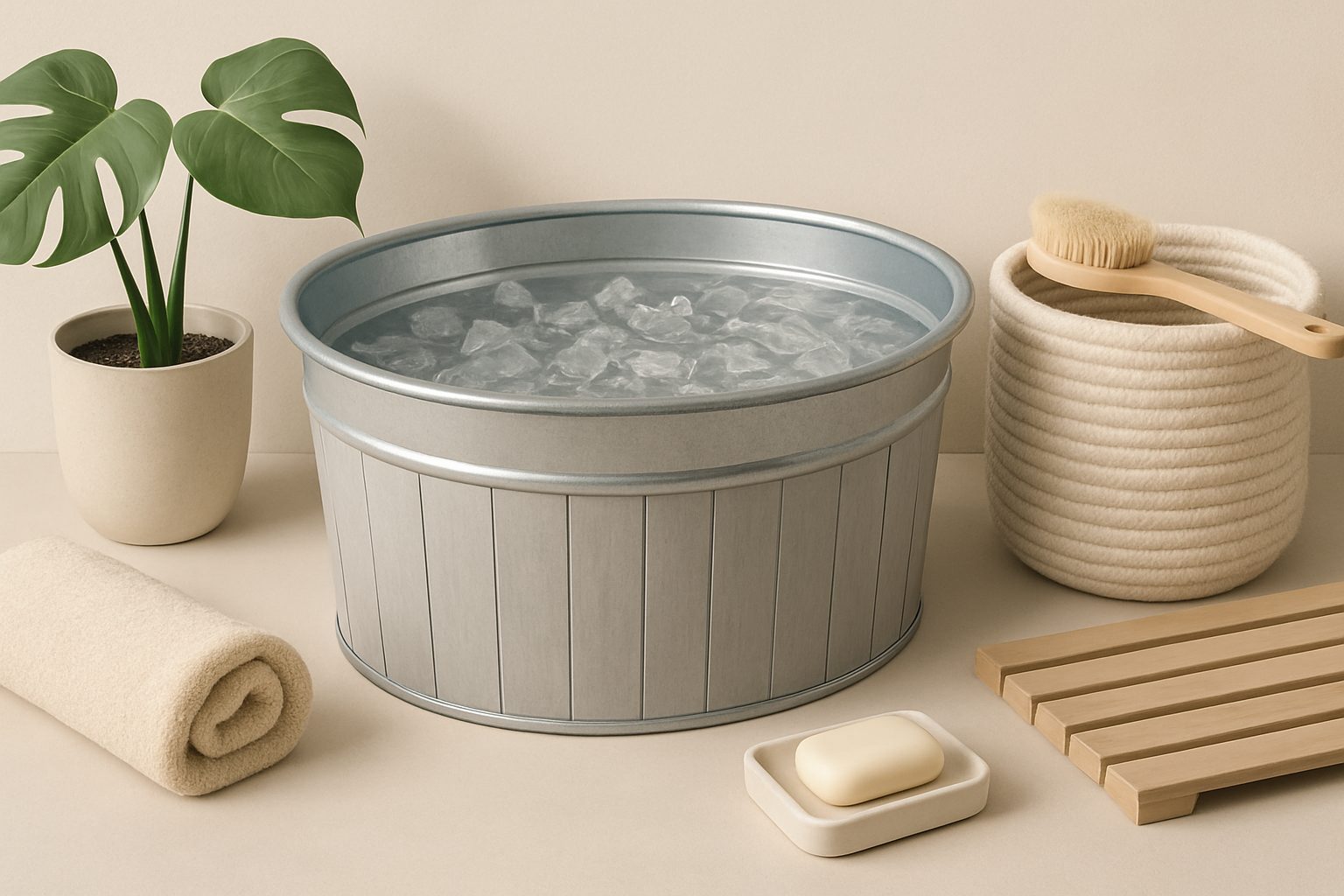
Galvanised steel barrels (£250–£400): Rust-resistant and durable, though heavier to move. They retain temperature better than plastic and feel more substantial, but lack integrated filtration or temperature management.
Best for: Longer-term users who want something more robust than inflatable but don't want premium pricing. Rigid tanks typically last 5+ years.
Temperature Management on a Budget
Below £500, integrated chilling isn't realistic. Your options:
Ice: Cheap and simple, but labour-intensive. A 20L bag of ice (around £5) lowers 200L of water by roughly 5–8°C. Multiple bags needed for 10°C or lower. Takes hours and works best during colder months.
Separate immersion chiller (£150–£300): A compact unit you submerge in your tank. Uses electricity and is slower than plumbed chillers, but more realistic than ice alone. Expect 6–12 hours to reach 10°C from room temperature.
Cold weather: Overnight water in winter often sits around 5–10°C without active cooling—your best saving.
Practical Tips for Budget Setup
- Location matters: Shade extends the time between cooling sessions. Direct sun accelerates temperature rise by 3–5°C per hour in summer.
- Invest in a cover: A foam or reflective cover (£20–£50) reduces temperature loss and UV damage significantly. This is worth the cost.
- Filter water between sessions: Stagnant water grows algae and bacteria. A basic submersible pump or small sand filter (£80–£150) keeps water clean and justifies keeping it longer.
- Drain it dry after winter: Freeze-thaw cycles damage plastic. If you're in an unheated shed or garage, drain fully October–March.
Is Sub-£500 Worth It?
Yes—if you're willing to accept temperature management work and plan for replacing it in 2–3 years. Budget tanks are excellent for testing whether cold plunging suits you before spending £3,000+.
No—if you want set-it-and-forget-it reliability, integrated temperature control, or a tank lasting 10+ years. You'll spend more on ice, electricity, and replacements over time.
For most UK beginners, a £300–£400 inflatable or rigid plastic tank paired with a modest immersion chiller is realistic: you get cold plunging started for under £500 total, minimal installation hassle, and the option to upgrade or abandon the habit without major financial loss.
More options
- Cold Plunge Tubs & Ice Bath Tanks (Amazon UK)
- Inflatable Cold Plunge & Ice Bath Inflatables (Amazon UK)
- Cold Water Chiller & Cooling Units (Amazon UK)
- Waterproof Thermometers & Cold Plunge Accessories (Amazon UK)
- Ice Bath Covers, Steps & Recovery Accessories (Amazon UK)