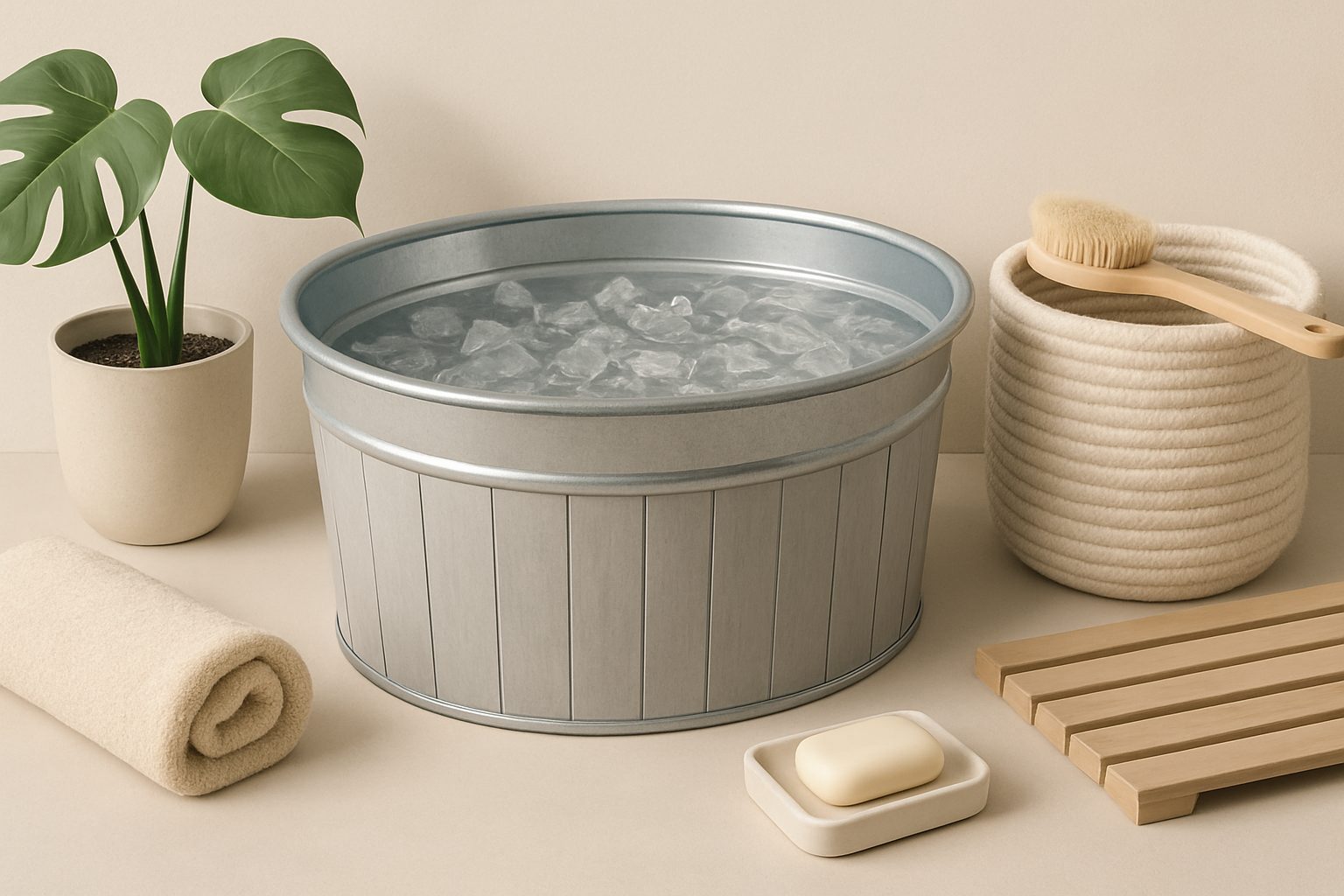
Cold Plunge Tank Buying Guide UK: Size, Insulation, Filtration & What Actually Matters
If you're considering adding a cold plunge tank to your home, you'll encounter a bewildering range of specifications and marketing claims. Most manufacturers lead with temperature claims or eye-catching designs, but the real decision points are more practical. Here's what actually determines whether a cold plunge tank works for your routine and budget.
Tank Size: Not Just About Your Space
Cold plunge tanks in the UK market range from 400-litre single-user models to 1,200-litre units designed for families or semi-commercial use. Your choice depends on three factors: actual immersion depth, available space, and whether you're sharing.
A 400-litre tank typically gives you about 85cm depth—workable for torso immersion but tight if you want to sink to shoulder height. The psychological difference between partial and full-body immersion matters more than manufacturers acknowledge. If you're in this for the nervous system activation benefits, you want to be properly submerged.
Measure your space ruthlessly. These tanks are heavy when filled (500+ kilos for a 600-litre model), and you'll need access for maintenance. A basement or garage suits them better than a tight garden corner. UK homes rarely have unlimited floor space, so be honest about what fits without becoming an eyesore or blocking circulation.
Temperature Control: The Make-Or-Break Component
This is where most people get disappointed. A tank isn't cold plunging without reliable cooling, and cheap immersion heaters marketed as "chillers" won't cut it. Many budget models rely on ice or ice baths—theoretically workable but genuinely tedious as a daily practice. If you're serious about regular immersion, temperature control equipment costs more than the tank itself.
Proper cooling systems use a heat pump or chiller unit that actively reduces water temperature. These run between £2,000 and £6,000 installed, and they consume meaningful electricity. The tank alone might be £3,000-5,000, but the cooling system is the real investment. Skip this, and you're buying an expensive bucket to fill with ice bags each week.
Look for systems that hold temperature between 5–15°C reliably. Temperature swing matters—a tank that fluctuates wildly is frustrating and unpredictable. Larger tanks with better insulation tend to maintain temperature more steadily than thin-walled models.
Insulation: Where Design Meets Physics
Tank walls make a real difference. Single-skin plastic models lose heat rapidly; even a small pump working continuously can't keep up. Properly insulated tanks have double walls with foam or similar materials between them, which reduces heat loss by 60–80% compared to single-skin designs.
Check the specification sheets for R-value or U-value ratings if they're provided. In the UK, where ambient air temperature is rarely warm, insulation directly impacts running costs. An uninsulated tank in winter might need its cooling system running 18 hours daily; a well-insulated one, perhaps 6–8 hours. That's a real difference in your electricity bill over a year.
Material matters too. Stainless steel tanks are durable and clean-looking but conduct temperature poorly without insulation—they'll feel cold to the touch in winter, losing heat through the sides. Composite or reinforced plastic models with integrated insulation tend to perform better thermally, though they may not feel as robust.
Filtration and Water Quality
This aspect gets overlooked until you're staring at cloudy water. Cold water reduces biological activity compared to warm pools, but it doesn't prevent degradation entirely. Any tank that sits for days without movement will develop biofilm and algae on surfaces.
A basic recirculating pump with cartridge filtration handles light use. For regular daily or multiple-weekly immersion, invest in a proper filtration system: sand filters or UV sterilisation combined with cartridge pre-filters. These cost £800–2,000 but genuinely keep water usable for months between full drains.
Chemical additives (chlorine-free systems using hydrogen peroxide or bromine) work but add ongoing costs and require monitoring. Some people prefer monthly full drains and refills over continuous chemical management—it's a trade-off between convenience and simplicity.
Build Quality and Materials
UK climate means freeze-thaw cycles, and tanks need to survive them. Plastic models must be cold-rated; basic outdoor pool plastics become brittle and crack in winter. Stainless steel doesn't crack, but welds need proper inspection and the material itself becomes harder to work with in freezing temperatures.
Pipes and fittings freeze easily in UK winters if not insulated or drained. Check whether any system requires winterisation procedures—some do, some don't. This is worth factoring in if you're using the tank year-round rather than draining it in December.
The Hidden Costs
Budget-conscious buyers often miss the total cost picture. A £3,500 tank plus £4,000 chiller, £1,500 filtration setup, and installation labour comes to £9,000+. Annual running costs (electricity, maintenance, occasional repairs) run £400–800 depending on frequency of use and your energy tariff. This isn't a casual purchase.
Resale value is uncertain. Cold plunge tanks aren't yet a standard home feature in the UK, so they don't universally add value like a hot tub might. If you're installing one, do it for your own use, not as a property upgrade bet.
Making Your Choice
Prioritise cooling capability over tank aesthetics. A functional, less attractive tank that maintains temperature beats a beautiful one that's perpetually either too cold or too warm. In the UK's variable climate, insulation and reliable chilling matter far more than design.
Test whether cold water immersion actually suits your routine before committing. A weekend at a cold therapy facility or sports centre often costs less than the deposit on a home system, and it's worthwhile to confirm it's actually something you'll use.
More options
- Cold Plunge Tubs & Ice Bath Tanks (Amazon UK)
- Inflatable Cold Plunge & Ice Bath Inflatables (Amazon UK)
- Cold Water Chiller & Cooling Units (Amazon UK)
- Waterproof Thermometers & Cold Plunge Accessories (Amazon UK)
- Ice Bath Covers, Steps & Recovery Accessories (Amazon UK)