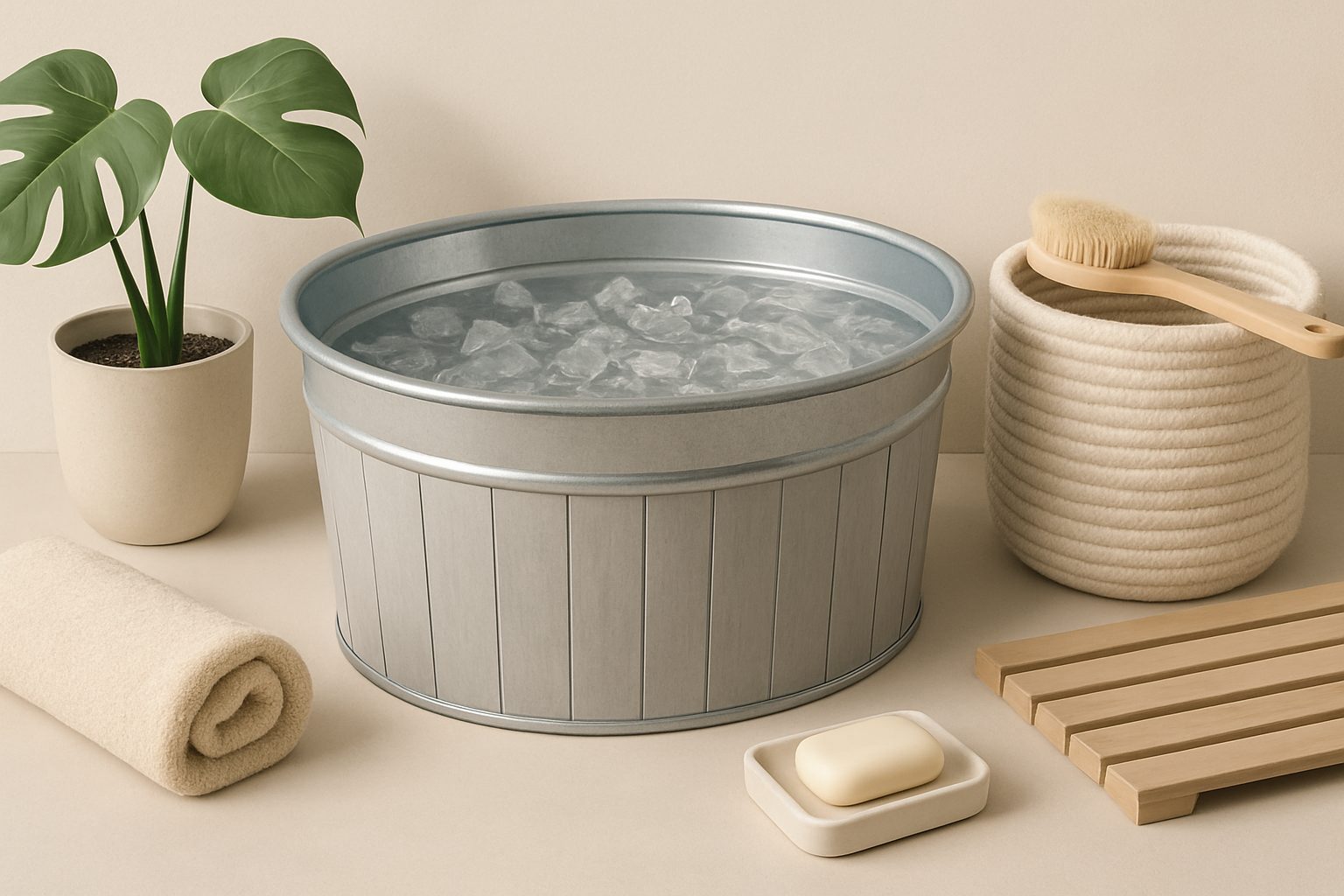
Cold Plunge Temperature Guide: What Temp Should Your Ice Bath Be in the UK?
Getting the temperature right is the single most important factor when you're starting out with cold plunging. Too warm and you won't see any of the claimed benefits; too cold and you risk shock, unsafe breathing patterns, or worse. The range that works depends entirely on your experience level, cardiovascular fitness, and what you're actually trying to achieve.
The Science Behind Temperature
Cold exposure triggers your parasympathetic nervous system—your body's natural brake pedal—but only within specific temperature windows. Below roughly 15°C, your body's responses become more about survival than adaptation. Your breathing becomes ragged, your heart rate spikes unpredictably, and you lose the ability to stay calm. Above 20°C, especially for experienced users, you're mostly just getting wet.
The sweet spot for genuine benefits sits between 10°C and 15°C for most people. Within that range, your body activates cold-shock response (the first 30 seconds), then gradually shifts towards a parasympathetic state where your nervous system actually learns to regulate itself. Spend longer than 5–10 minutes at these temperatures and you're not building resilience; you're just prolonging discomfort.
Temperature Ranges by Experience Level
Beginners (first 2–4 weeks)
Start at 15–18°C. This feels cold enough to be noticeable but won't trigger panic responses that undermine your technique. Aim for 1–3 minutes of immersion. At this temperature, you can focus on breathing—in through your nose, out through your mouth—without your nervous system screaming at you to get out.
UK tap water averages around 10–12°C in winter and 14–16°C in summer. If you're just filling a tub or using a small plunge pool without a chiller, you're already starting at beginner-friendly temperatures in the colder months.
Intermediate (4–12 weeks)
Once you can sit calmly at 15–18°C for 3 minutes without gasping, progress to 12–15°C. Stay for 2–5 minutes. This is where most of the adaptations actually happen. Your parasympathetic nervous system learns to downregulate your heart rate even when cold signals are firing. You'll notice improved mood, faster recovery from workouts, and better sleep quality at this stage.
Advanced (3+ months)
Only move below 10°C once you've built genuine cold tolerance. Yes, elite cold plungers talk about 2–5°C, but that's the extreme end. Most people who've been doing this for years find 8–12°C for 5–10 minutes to be far more sustainable and arguably more effective than chasing novelty low numbers.
Seasonal UK Tap Water as Your Baseline
If you're using unheated water—a bath, outdoor pool, or small tub you're topping up with ice—you're already working within the UK's natural temperature cycles:
- Winter (November–February): Tap water sits at 5–10°C. You don't need to add ice; you need patience and proper breathing technique.
- Spring/Autumn: Around 10–14°C. This is the Goldilocks zone for most people without extra cooling.
- Summer (June–August): 14–18°C. You'll likely need ice or a chiller unit if you want genuine cold exposure.
These aren't precise figures—they vary by region, your water pipes, and whether your system's insulated—but they're useful anchors. If you're in the Midlands or Scotland, you're typically a couple of degrees colder than London or the South Coast.
How to Reach Your Target Temperature
With ice alone: Buy bag ice from a supermarket and monitor with a thermometer. Add 5–10kg to a standard 200-litre plunge pool and check every 5–10 minutes. This works but gives you only coarse control; you'll overshoot. A simple floating pool thermometer (under £5) pays for itself immediately.
With a chiller unit: If you want reliable precision—the same 12°C every morning regardless of season—a dedicated plunge chiller is non-negotiable. This is especially important if you're tracking your progress, testing different exposure times, or training seriously. You'll never nail the nuance of adaptation if the temperature keeps shifting.
The ice-plus-salt trick: Some people add salt to ice to drop the temperature faster, which can theoretically reach 0°C or below. Don't do this at home unless you're extremely confident in your cold tolerance. The temperature drop is unpredictable, and brine contact with skin feels unpleasant.
Duration and Frequency Matter as Much as Temperature
Temperature and time are linked. At 15°C, you can safely spend 5–10 minutes. At 8°C, most people should cap it at 5 minutes, and beginners should stay under 3 minutes. Going longer at very low temperatures doesn't mean more benefit—it usually just means more stress on your system without the adaptation.
For frequency, 3–5 times per week is the sweet spot. Daily cold plunging works if your temperatures stay moderate (12–15°C) and times short (2–3 minutes), but it's not inherently better than fewer, higher-intensity sessions.
The Honest Reality
You won't feel amazing after your first few plunges. Expect discomfort, a racing heart, and the absolute certainty that you've made a terrible life choice during that first minute. Then, usually somewhere between week two and week three, something shifts. Your breathing stabilizes faster. Your mind quiets. You stop dreading it.
That shift happens reliably in the 12–15°C range for most people, which is exactly why starting there—even if you could technically handle colder—is the smart move. Temperature precision matters, but consistency and technique matter far more.
More options
- Cold Plunge Tubs & Ice Bath Tanks (Amazon UK)
- Inflatable Cold Plunge & Ice Bath Inflatables (Amazon UK)
- Cold Water Chiller & Cooling Units (Amazon UK)
- Waterproof Thermometers & Cold Plunge Accessories (Amazon UK)
- Ice Bath Covers, Steps & Recovery Accessories (Amazon UK)